Inquiry & requirements
Share drawings or samples; align material grade, tolerances, annual volume, surface finish, and compliance targets.
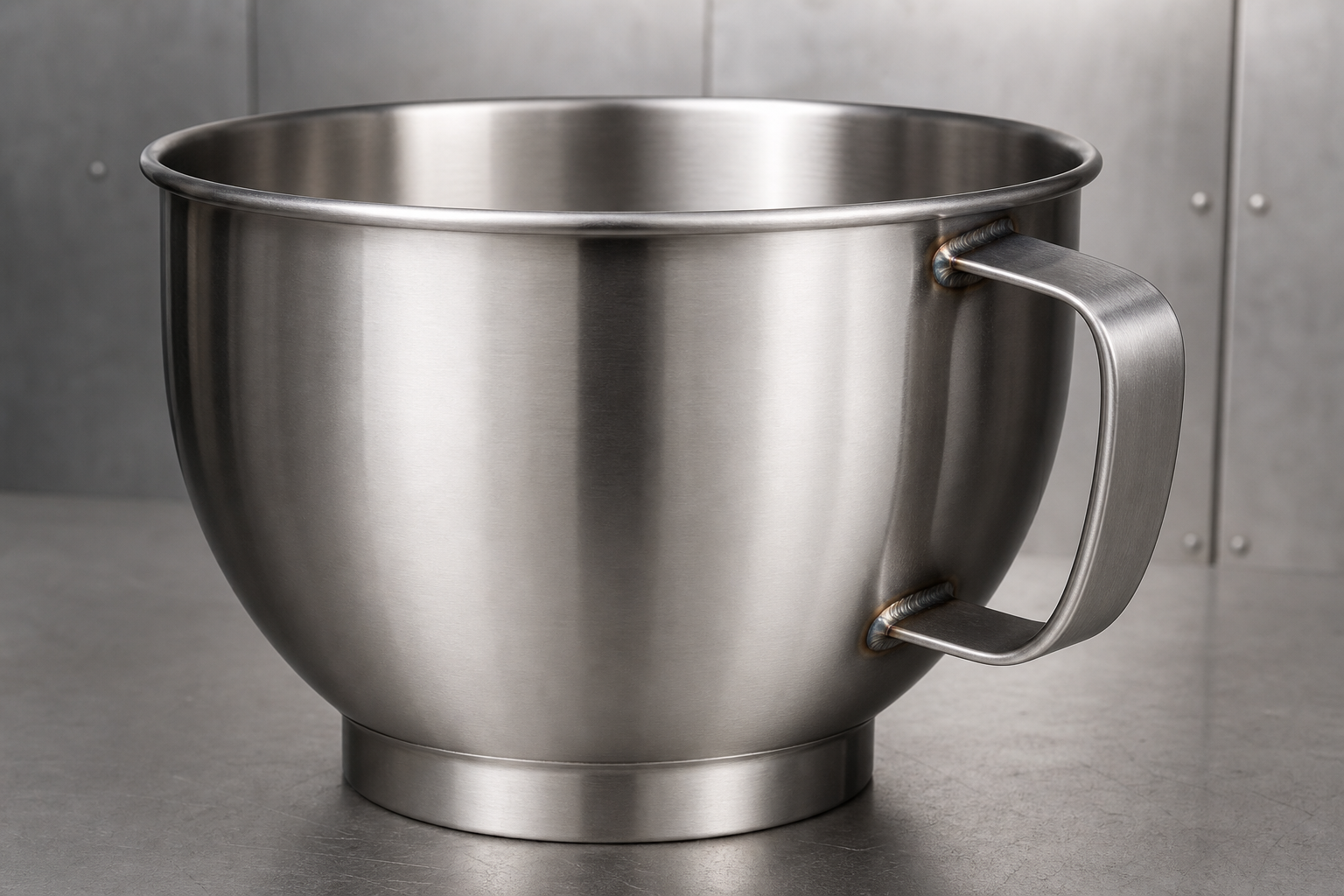
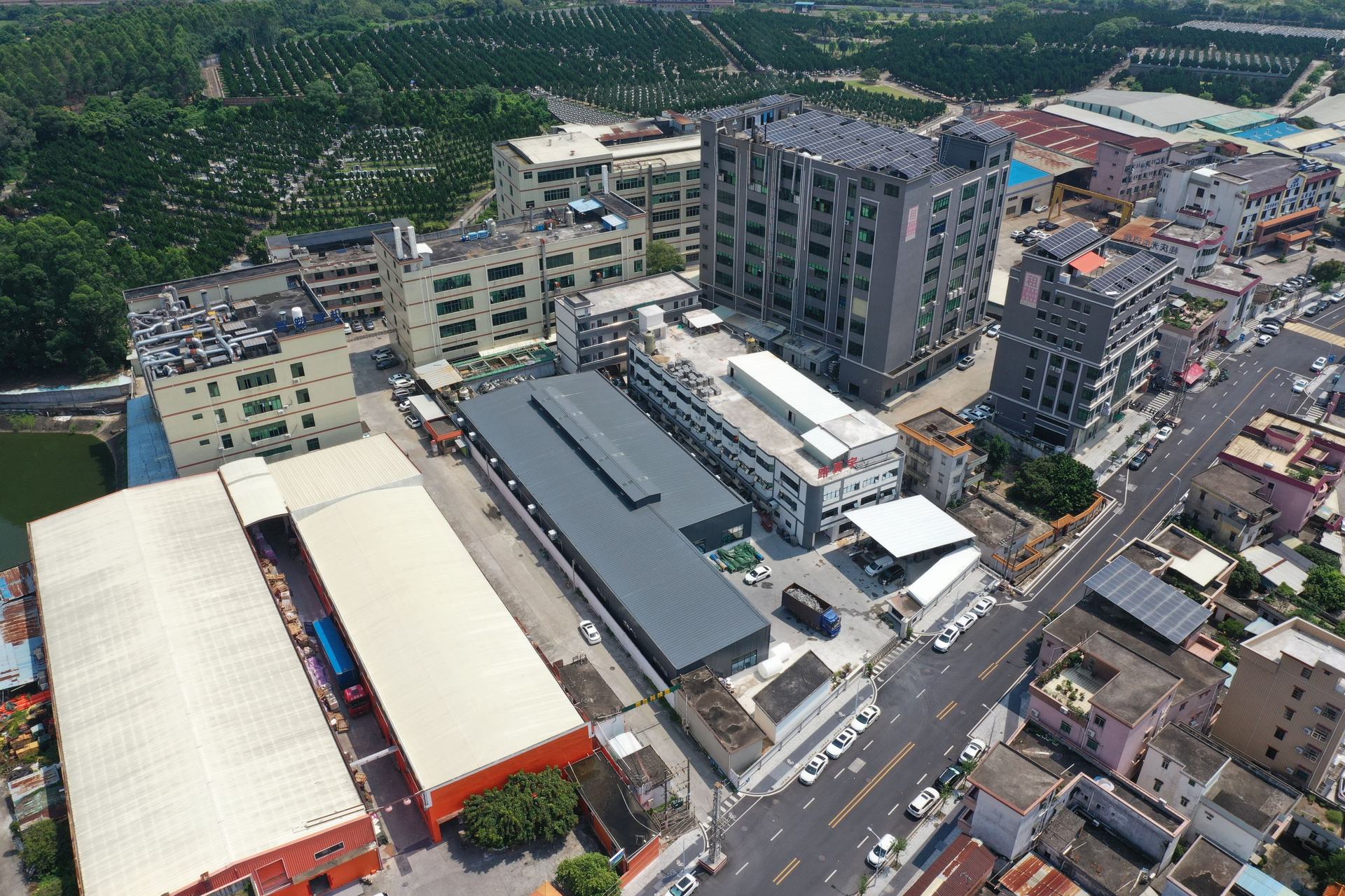
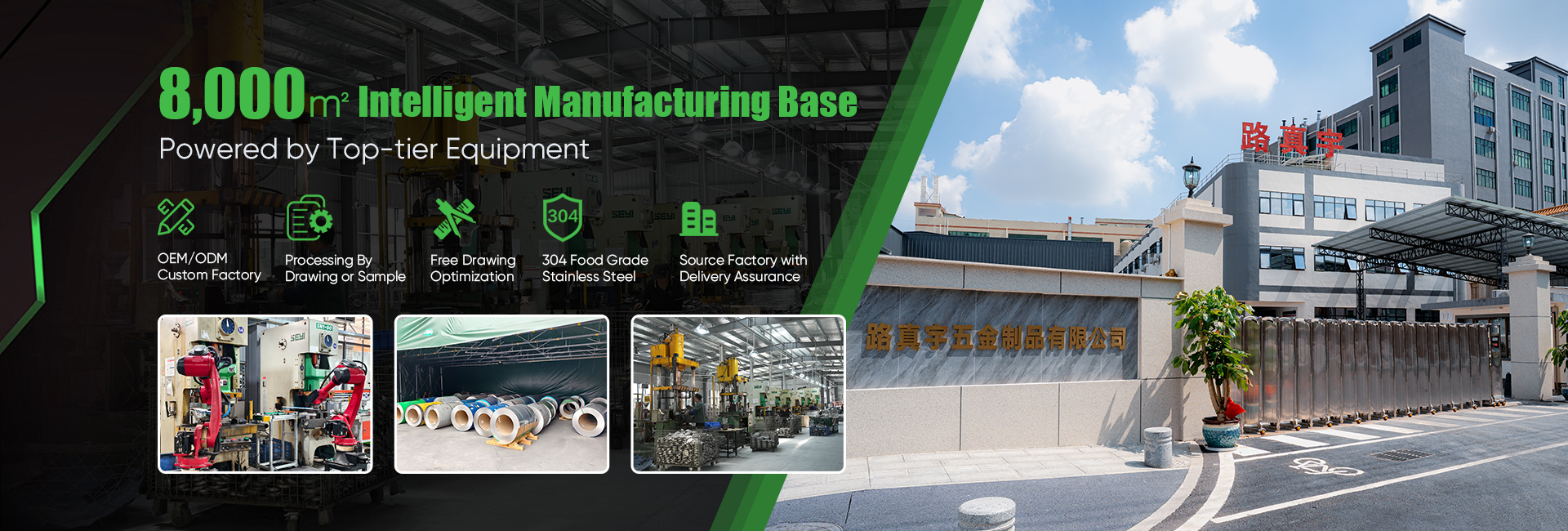
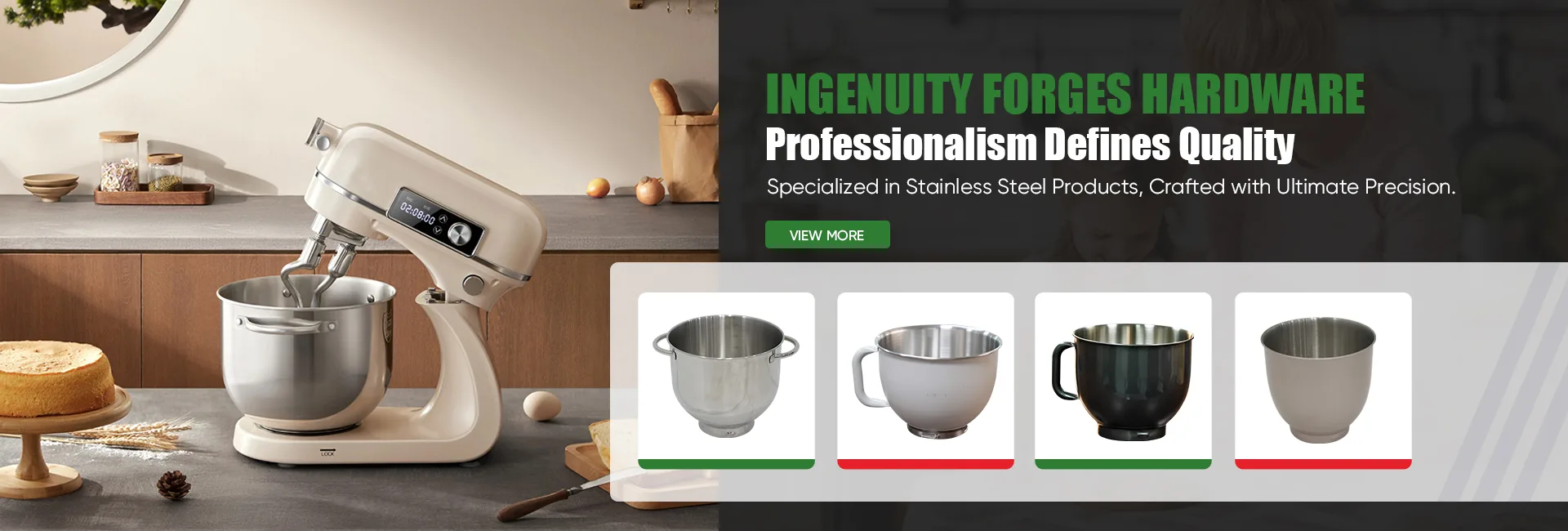
We deep-draw, stamp, weld, and finish food-grade stainless components for kitchen appliance programs. Around 90% of our current capacity is stand mixer bowls, with 200,000+ monthly output, 60+ owned molds, and 200+ customer molds managed under project agreements.
0+
Production space
Chashan base
0+
Press fleet
10T – 350T
0+
In-house molds
Owned mold base
0K+
Monthly bowl output
Stand mixer focus
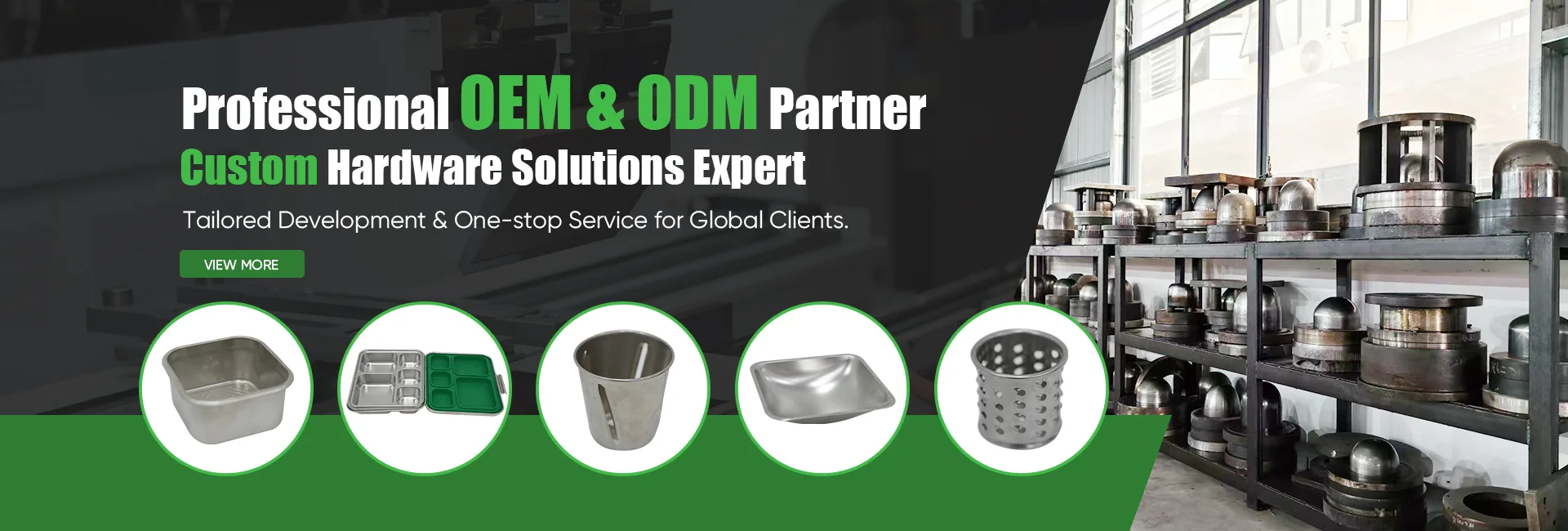
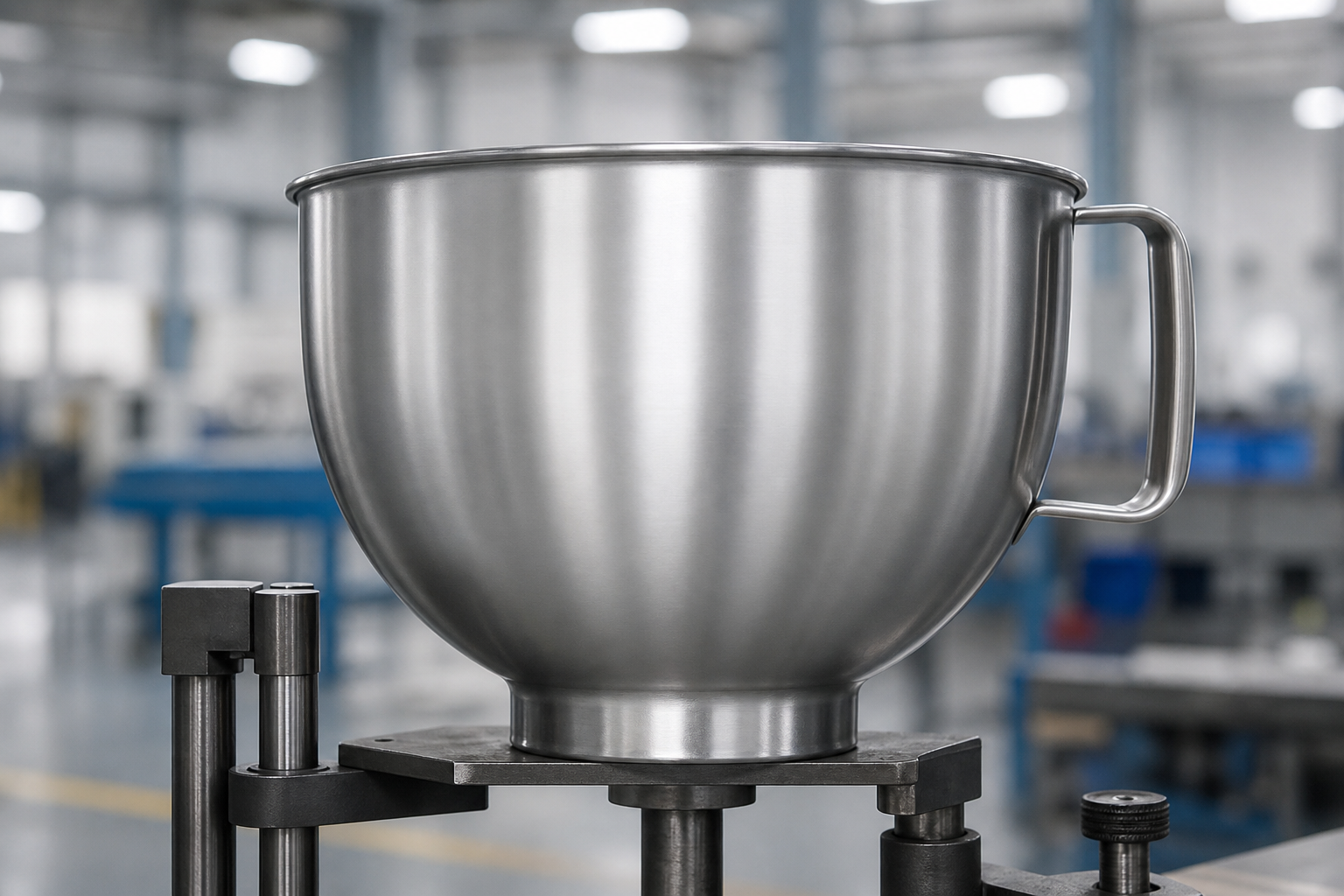
Photos show what our presses and molds can achieve. Your drawing may differ — send it for DFM.
Not a fixed catalog for spot purchase. Each program is customizable or replicable from your drawings.
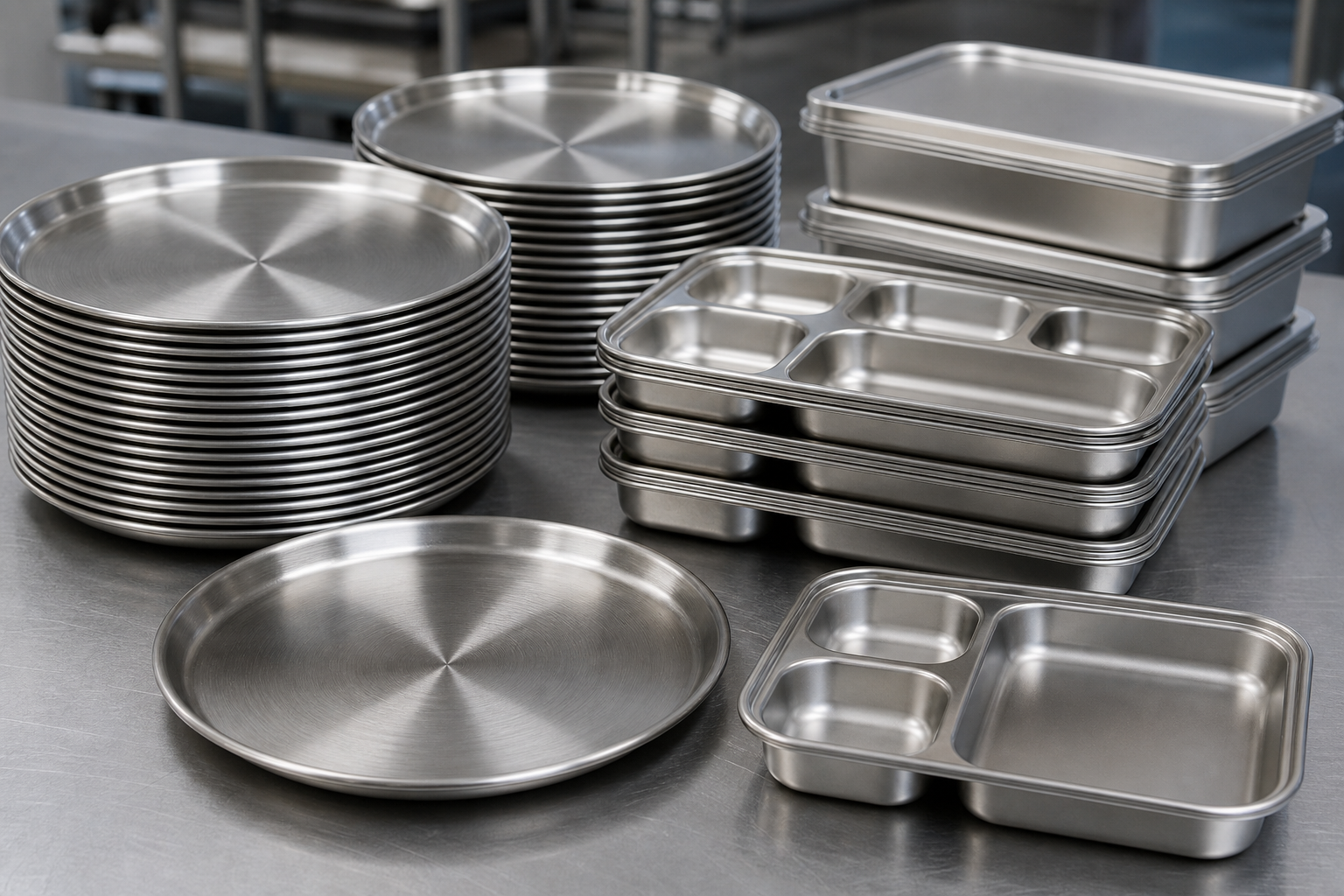
Kitchen appliance platforms we form from your drawings — deep draw, stamp, weld, and finish on one compliance stack.
Core volume · ~90%
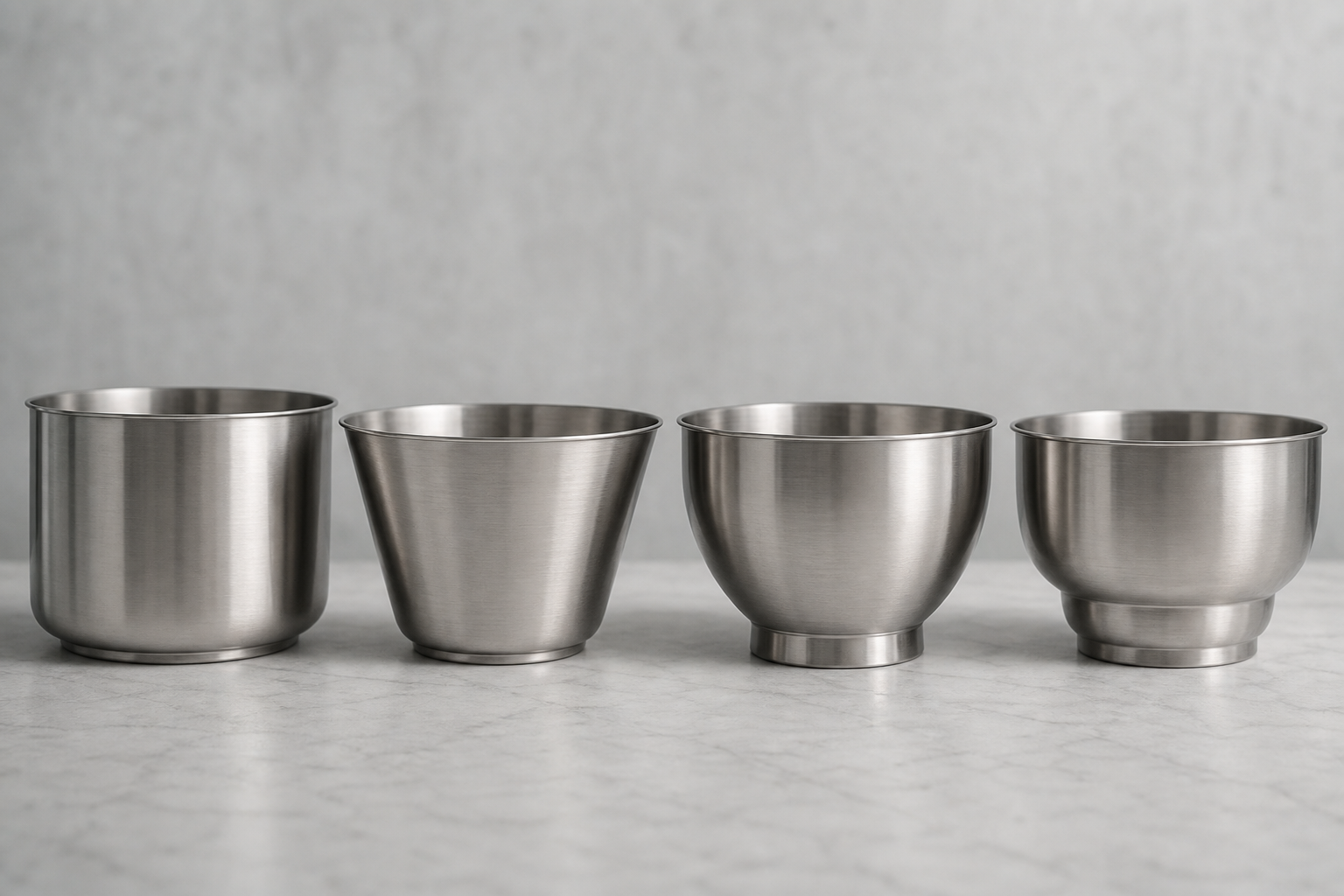
Deep-drawn 304/316 bowls for household and commercial mixers — cylindrical, flared, spherical, stepped-base, and custom ID profiles.
Drawing-based · RFQ
High-torque stamped and welded stainless components for meat grinders and slicer platforms — bowls, bases, and feed inlets from your drawings.
Engineering-led OEM — not a trading desk. Send a drawing; we reply with DFM and a clear next step.
LFGB, FDA, RoHS, REACH, and ISO9001-aligned programs with material traceability and OQC reports on request.
27 presses (10T–350T), 5 draw/stamp lines (3 automated), 8 polish lines, and group coating support in Humen.
60+ owned molds and 200+ customer molds under management — faster feasibility checks, clearer tooling paths, and protected customer assets.
Structured NPD: DFM review → prototypes → tooling → T1/T2 sign-off → volume with IPQC gates.
Buyers comparing Dongguan quotes usually discover the difference at trial molding — we surface it upfront.
| Topic | Typical job shop | Luzhenyu |
|---|---|---|
| Core focus | Mixed metal jobbing — bowls are one of many SKUs | ~90% capacity on stand-mixer bowls; 60+ owned molds and 200+ customer molds under management |
| Tooling | Outsourced dies; long rework loops | In-house mold center — typical new tooling 30–45 days with protected customer assets |
| Deep drawing | Single-pass trials; cracking / thin bottoms | Multi-pass routes; batch wall-thickness control for mixer dynamic balance |
| Surface & finish | Polish only, or outsource coating | 8 polish lines + group Humen coating (paint/UV/AFP) for one-stop delivery |
| Quality system | Informal checks; limited records | IQC → FAI → IPQC → OQC with shipment reports; ISO9001 on forming + coating entities |
| Compliance | Material cert only | LFGB / FDA / RoHS / REACH documentation coordinated per PO |
In contract metal manufacturing, “light” usually means variants on existing tooling; “deep” means new dies, new geometry, and a full NPI program — different investment, lead time, and buyer profile.
Within the envelope of existing dies and approved process routes: combine material grade, surface finish, marking method, optional add-ons, and packaging — without changing core forming geometry.
Best fit
Brand owners, distributors, and importers who need fast SKU iterations — material, finish, logo, and pack changes on a proven platform; replenishment and line extensions.
New contour, new fit-up, or significant die changes: engineering clarification, DFM, tooling and sampling, pilot runs, then volume with full QC and compliance documentation.
Best fit
Programs that need exclusive shapes, appliance-level fitment, or annual frameworks — buyers who can fund tooling and accept longer NPI cycles.
| Dimension | Light customization | Deep customization |
|---|---|---|
| Tooling & outline | Keep existing dies and part outline; mix options and specs. | New or heavily revised dies; change geometry, wall, and assembly. |
| Timeline | Shorter — material approval, color/finish changes, line changeovers. | Longer — design freeze, tooling, sampling, pilot, ramp. |
| MOQ & cost model | Usually lower than a full tooling program; MOQ ties to batch and changeover. | Tooling and sampling amortized; MOQs often tied to forecast and program. |
| Typical buyer | Channel fill-in, seasonal variants, gift/pack-driven programs. | Private-label exclusives, OEM appliance tiers, long-horizon POs. |
Actual material, finish, and option availability depend on engineering review, target-market regulations, and line capability. Structural add-ons must meet assembly safety and production consistency. Information is for orientation only — quotes and technical agreements prevail.
Typical metal-stamping program for deep customization: RFQ → DFM & tooling plan → quotation → sampling → pilot → mass production → QC → shipment.

Share drawings or samples; align material grade, tolerances, annual volume, surface finish, and compliance targets.

Optimize strip layout, springback, and die strategy — fewer operations, better yield, lower scrap.

Clear tooling cost, sample lead time, volume-tier pricing, and delivery; confirm PO against signed specs.

Build progressive or stage tooling; validate first articles and approval samples for fit, finish, and function.

Short production lot to stabilize cycle time and yield; lock SIP/SOP before full-scale ramp.

Stamping, deep drawing, welding per route; deburring, polishing, plating or coating as specified.

Dimensional and cosmetic checks, AQL where agreed; CMM / reports and third-party certs on request.

Export cartons and marks; forwarder handoff. Engineering changes and capacity alignment on repeat POs.
Prefer to discuss on email only? Leave a message with drawings and volumes — no third-party storefront required.
Submit inquiryEngineering-led OEM — not a trading desk. Send a drawing; we reply with DFM and a clear next step.
Structured references for overseas sourcing teams — details available under NDA on live programs.

Stand mixer · Appliance brand

Stand mixer · US specialty retail

Food containers · EU HORECA

Appliance · Leading CN stand-mixer brand
Clear gates — so your RFQ time is not wasted.
Day 0–1
Sales + engineering confirm files, product line, and target market. Missing data — we ask once, clearly.
Day 1–3
Forming route, material grade, risk notes (crack zones, draft, weld if any), and tooling class (existing vs new).
Day 3–5
Tooling fee (if new), sample cost, tiered unit pricing, and lead-time assumptions — when inputs are sufficient.
Week 2–6
Trial parts against signed limits; adjustments before PO release.
Production
Deposit, material lock, IPQC gates, OQC report and export docs per shipment.
No purchase obligation. Share a STEP/IGES/PDF, reference photo, or golden sample description — engineering replies with feasibility and a quotation path.
Typical first response within 1 business day (WhatsApp often faster for Asia/EU time zones).